A roof can look perfectly acceptable from the street while the structure beneath its shingles is compromised. This guide to roof decking explains the layer that gives your roofing system its strength, why it matters after North Texas storms, and how to make an informed decision when repairs or replacement are on the table. Your home is an asset. The decking beneath the visible roofing material deserves the same careful attention as the shingles, flashing, and ventilation above it.
What Roof Decking Does for Your Home
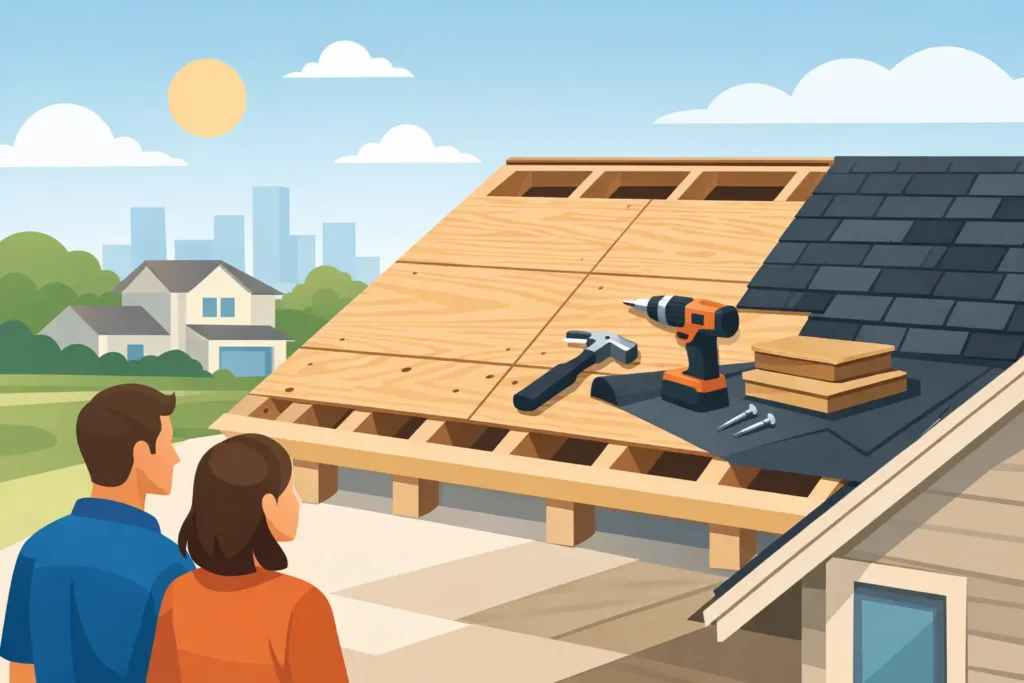
Roof decking, often called roof sheathing, is the structural panel layer fastened over the roof framing. It creates a solid, continuous surface for underlayment and roofing materials. On most homes in Sunnyvale, Heath, Rockwall, Forney, and surrounding communities, it is made from plywood or oriented strand board, commonly known as OSB.
Decking has several jobs at once. It ties the roof framing together, supports the roofing system, provides the surface that roofing nails must penetrate, and helps the roof hold its shape under wind loads. When the deck is dry, sound, and properly fastened, shingles can lie flat and perform as intended. When it is weakened by moisture, age, or poor installation, even premium shingles cannot compensate for the problem underneath.
Homeowners sometimes use the phrase “roof deck” to mean an outdoor rooftop patio. That is a different construction system. In residential roofing, roof decking refers to the sheathing below the roof covering.
Plywood vs. OSB: What Is the Difference?
Plywood and OSB are both accepted roof-decking materials when they are correctly rated, installed, and protected from prolonged moisture exposure. The better choice depends on the roof design, local requirements, material availability, existing construction, and the installer’s specifications.
Plywood is made from thin layers of wood veneer bonded together with alternating grain directions. It is known for stiffness and may hold up somewhat better when it experiences limited moisture exposure during construction. It is also often preferred for certain repair situations because it can be cut and fitted cleanly around damaged areas.
OSB is made from engineered wood strands pressed and bonded into panels. It is widely used in modern construction, cost-effective, and performs well when it stays dry and is installed with proper panel spacing. The trade-off is that exposed OSB edges can swell after repeated wetting. A professional inspection should focus on actual panel condition, not simply the material type.
Neither material is automatically a reason to replace a roof. The condition of the decking is what matters. A sound OSB deck does not need replacement because it is OSB, and an aged plywood deck should not be assumed to be sound simply because it is plywood.
Signs Your Roof Decking May Be Damaged
Decking problems often begin with water intrusion. A missing shingle, failed pipe boot, damaged flashing, backed-up gutter, or storm-created opening can allow water to reach the sheathing. Over time, that moisture can soften wood fibers, loosen fasteners, and create conditions for mold or rot.
From outside, look for roof areas that appear wavy, dipped, or uneven compared with the surrounding slopes. Shingles that sag between rafters, show unusual nail pops, or repeatedly fail in one location can point to a substrate issue. These signs do not confirm decking damage by themselves, but they warrant a close evaluation.
Inside the home, water stains on ceilings, damp attic insulation, visible dark staining on roof sheathing, peeling paint near upper walls, or a persistent musty smell should be addressed promptly. In the attic, a qualified inspector may identify soft panels, delamination, mildew, or daylight visible through unintended openings.
After hail or high-wind events, the visible damage may receive the most attention. That makes sense, but a storm inspection should also include the roof’s underlying structure where accessible. Wind can lift shingles and break seals without immediately creating a dramatic leak. Moisture entering through those compromised areas can damage decking later if the roof is not repaired in time.
When Decking Can Be Repaired and When It Should Be Replaced
A small, isolated area of decay may be repairable. For example, a long-term leak around a vent pipe may have damaged only a few panels near that penetration. During a roof replacement or targeted repair, the affected decking can be removed and replaced while the surrounding sound material remains in place.
Replacement becomes more likely when panels are soft underfoot, visibly rotten, extensively swollen, structurally cracked, or unable to hold roofing fasteners. Widespread water intrusion, long-neglected leaks, and multiple layers of failing roofing can also reveal broader problems once the old roof is removed.
This is why a contractor should not promise that every roof deck is perfect before removing the roofing materials. Some issues are hidden until tear-off. The responsible approach is to inspect what can be seen before work begins, document concealed damage as it is uncovered, explain the repair scope clearly, and obtain approval before proceeding with additional work.
A trustworthy recommendation is not automatically a full deck replacement. Replacing sound sheathing adds unnecessary expense. On the other hand, covering over deteriorated panels can undermine the performance of an otherwise well-installed new roof. The right answer depends on documented conditions, not a sales script.
Roof Decking During a Full Roof Replacement
A roof replacement is the best opportunity to evaluate the full decking surface. Once shingles and underlayment are removed, the crew can inspect the panels, seams, fasteners, roof penetrations, valleys, and transitions where leaks are more likely to occur.
Manufacturer-standard installation begins with a stable substrate. Damaged decking should be replaced with compatible, properly sized panels. Panels need correct spacing to allow for normal expansion, and they must be fastened securely to framing. Improper spacing can contribute to buckling. Poor fastening can leave sections vulnerable to movement in high winds.
The deck must also be clean and dry before underlayment is installed. Trapping moisture beneath a new roofing system is not acceptable workmanship. From there, underlayment, flashing, ventilation components, and shingles or metal panels must be installed as an integrated system. Every layer affects the next.
For homes receiving metal roofing, decking condition is especially visible in the finished result. Metal panels can telegraph irregularities below them, and a flat, stable surface helps support proper installation and long-term appearance.
Why North Texas Conditions Raise the Stakes
North Texas roofs face a demanding combination of intense sun, temperature swings, hail, driving rain, and severe wind. These conditions test the roof covering first, but water exposure can quickly become a decking problem if damage is overlooked.
Homes with mature trees may also face punctures from falling limbs and repeated debris accumulation in valleys. Older homes can have historic repairs, prior leaks, or aging ventilation details that deserve attention during an inspection. Newer homes are not immune either. A construction defect or a storm event can affect any roof regardless of age.
Insurance may cover storm-related roof damage when the loss meets policy requirements, but coverage decisions depend on the policy, the documented damage, and the carrier’s assessment. Clear photographs, measurements, and a detailed scope help homeowners understand what is present. They also help separate storm damage from maintenance-related deterioration. DTM Builds supports homeowners with thorough assessments and insurance-claim documentation without pushing a replacement that the roof does not need.
Questions to Ask Before Authorizing Decking Work
Before approving decking repairs, ask the contractor to identify the location and extent of each affected area. You should understand whether the concern is surface staining, moisture-related swelling, structural softness, fastener failure, or active decay. Ask how the condition was verified and whether the proposed work involves localized panel replacement or a larger structural correction.
It is also reasonable to ask how added decking work will be priced if concealed damage is found after tear-off. A clear process protects everyone. The estimate should explain the allowance or per-sheet pricing, the approval process for additional repairs, and how the work will be documented.
Finally, ask how the contractor will protect the property during the project. Decking repairs require open-roof exposure for a period of time. Organized crews plan around weather, protect landscaping and exterior features, keep the job site clean, and secure the home before leaving each day.
Protect the Layer No One Sees
The best roof decisions are not based solely on what is visible from the driveway. A roof that looks new but rests on compromised decking is not a lasting investment, while a roof with isolated, documented deck repairs can perform reliably for years when the rest of the system is installed correctly.
If you have noticed leaks, ceiling stains, storm damage, or uneven roof lines, schedule a professional inspection before the problem grows. A clear assessment of the decking gives you the information to repair what is necessary, avoid what is not, and protect the home you have worked hard to build.