
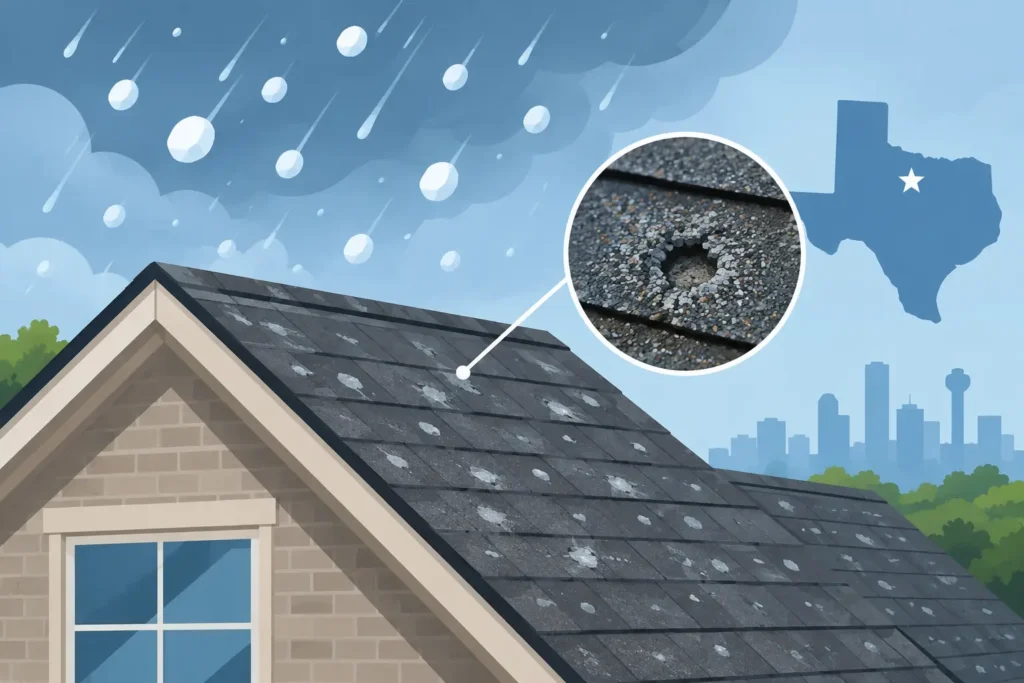
A hail damage example is rarely as obvious as a hole in the roof. After a North Texas storm, the more common finding is a field of shingles with small, scattered impact marks that have loosened protective granules and bruised the asphalt beneath. From the ground, the roof may look unchanged. Up close, those marks can shorten its service life and create a legitimate insurance claim – or they may be ordinary wear that does not justify replacement.
That distinction matters. Your home is an asset, and a rushed roofing decision can be as costly as ignoring real storm damage. The right response is a documented inspection that separates hail impacts from age, foot traffic, heat-related blistering, and preexisting issues.
A Hail Damage Example: What an Inspector Sees
Consider a typical architectural shingle roof in Rockwall County after a spring hailstorm. The homeowner notices a few granules in the gutters and sees neighbors having their roofs inspected. There is no active ceiling leak, no missing shingles, and no visible damage from the street.
On the roof, an experienced inspector may find circular or slightly irregular areas where granules have been displaced. A fresh hail strike often exposes darker asphalt, feels soft or bruised when gently pressed, and has a distinct impact point. The damage tends to appear on multiple roof slopes, although one elevation may be worse depending on storm direction and wind.
The inspector also checks soft metals. Dented gutter screens, downspouts, roof vents, metal flashing, and air-conditioning fins can help confirm that hail reached the property. These items do not prove the shingles are damaged on their own, but they provide useful context. A full assessment compares the storm pattern across the roof rather than relying on one mark or one dent.
In this example, the roof has enough fresh impacts within the test areas to indicate functional shingle damage. The shingles are not leaking yet, but the protective granule surface has been compromised in enough locations that replacement may be warranted. Documentation should include photos of each slope, collateral damage, roof age and condition, and any existing repairs or wear.
That is different from finding a few isolated marks on an older roof. If impacts are limited, the shingles remain intact, and the marks are consistent with normal weathering, repair or monitoring may be the more responsible recommendation. A contractor should not turn every storm into a replacement sale.
What Hail Damage Can Look Like on Different Roofs
Hail does not leave the same signature on every material. The roof type, hail size, wind speed, roof age, and installation quality all affect the result.
Asphalt shingles
Asphalt shingles are common throughout Sunnyvale, Heath, Wylie, Forney, and nearby communities. Hail may create a dark spot where granules are missing, a soft spot in the asphalt mat, or a fracture that becomes more visible over time. On newer shingles, the impact can look sharp and fresh. On an older roof, it can be harder to distinguish from general granule loss.
Granules in gutters deserve attention, but they are not a verdict. Some granule shedding is expected as shingles age. What matters is whether there is concentrated, fresh loss associated with identifiable impact marks across multiple areas of the roof.
Metal roofing
Metal roofing usually shows hail as dents rather than punctures. Cosmetic dents may not affect the roof’s water-shedding performance, but the extent, location, finish condition, and policy language still matter. A dented standing-seam panel may be an appearance issue, while damage near seams, fasteners, flashing, or penetrations calls for closer evaluation.
Tile, slate, and specialty materials
Brittle materials can crack or chip from impact. The damage may be obvious, but safe evaluation is critical because improper walking can cause additional breakage. A thorough inspection should identify whether individual components can be replaced while preserving system performance and appearance, or whether broader work is needed.
Why a Roof Can Be Damaged Before It Leaks
Homeowners often ask a fair question: if the roof is not leaking, why take action now?
A roof is a layered system. Shingles shed water, underlayment provides secondary protection, flashing manages transitions, and ventilation helps control heat and moisture. Hail can damage the outer shingle layer without immediately penetrating the system. The roof may continue shedding water through several storms, then develop leaks after summer heat, wind, thermal movement, or normal aging exposes the weakened areas.
Waiting for a ceiling stain is not a reliable strategy. By that point, the repair may involve wet insulation, damaged drywall, microbial growth, or framing concerns in addition to the roof itself. A timely inspection gives you information while the evidence is fresh and before a small exterior problem turns into interior work.
This does not mean every impacted roof needs replacement. It means the decision should be based on condition, not on whether water has already reached the living space.
How to Document a Storm Without Creating More Damage
After hail, start from the ground. Photograph hail accumulation if it is safe, along with damaged screens, gutters, fencing, outdoor furniture, and visible roof conditions. Note the date and approximate time of the storm. If you have prior roof photos, keep them available because they can help establish what was present before the event.
Avoid climbing onto the roof to search for damage. Wet shingles, steep slopes, and loose granules create a fall risk. Walking in the wrong areas can also scuff or fracture shingles, which complicates the inspection and the claim record.
If there is active water entry, visible puncture damage, or a tree limb has affected the roof, treat it as an emergency. Temporary protection may be necessary to limit further damage, but it should be installed in a way that does not create additional roof penetrations or hide the original condition. Document the issue before temporary work begins when circumstances allow.
Keep receipts for reasonable emergency mitigation and any related interior protection. Insurance carriers generally need clear information about both the storm-related damage and the steps taken to prevent additional loss.
The Insurance Question: Evidence First, Expectations Second
A storm inspection is not a guarantee of coverage, and a contractor should not promise an outcome before the carrier evaluates the claim. Coverage depends on your policy, deductible, roof age provisions, exclusions, prior damage, and the adjuster’s findings.
What a well-organized inspection can do is give you a factual starting point. Clear photos, marked test areas, measurements, material identification, repair observations, and notes on collateral damage help present the roof’s condition accurately. If an adjuster visits, you should understand what was observed and have supporting documentation available.
Be careful with high-pressure messages that tell every homeowner they qualify for a new roof. Hail claims are legitimate when the damage supports them. They are not automatic, and a claim filed without sufficient evidence can create frustration without solving a roofing problem. Honest guidance protects both the property and the homeowner’s time.
What Happens After the Inspection
The best next step depends on the findings. If there is no meaningful storm damage, retain the inspection notes and continue normal maintenance. If there are isolated repairable issues, address them before water reaches the roof deck. If the roof has widespread functional damage or is near the end of its useful life, a replacement plan should account for the full roofing system – shingles or metal panels, underlayment, flashing, ventilation, drip edge, and cleanup.
Manufacturer-standard installation matters as much as material selection. A quality roof replacement is not simply new shingles over an old problem. It requires careful tear-off or preparation, proper deck review, correctly integrated flashing, balanced ventilation, and a clean job site that respects the home around it.
For homeowners managing hail damage in North Texas, DTM Builds approaches the inspection as a property decision, not a sales pitch. The goal is to provide a clear assessment, practical options, and documentation that helps you decide what protects the home best.
A hailstorm may pass in minutes, but the right inspection can protect your roof for years. If you suspect damage, document what you can safely see, avoid quick conclusions, and get a professional assessment while the storm evidence is still clear.